




Following the signing of the Dayton Peace Agreement in December 1995, the territorial reorganization of Bosnia and Herzegovina resulted in several Sarajevo municipalities — including Grbavica, Ilijaš, Vogošća, Hadžići, Ilidža, and Rajlovac — being transferred to the Federation of Bosnia and Herzegovina. These areas, which had been under Serb control during the conflict, were thereby separated from the territory of Republika Srpska.
Between January and March 1996, a large number of Serbs residing in these districts left Sarajevo. Contemporary accounts describe the departure as widespread and rapid. According to various sources, the decision to leave was not formally coordinated through official directives, nor was it accompanied by structured relocation assistance. Many families cited concerns regarding personal security, uncertainty about future governance, and a lack of confidence in international guarantees as primary reasons for departure.
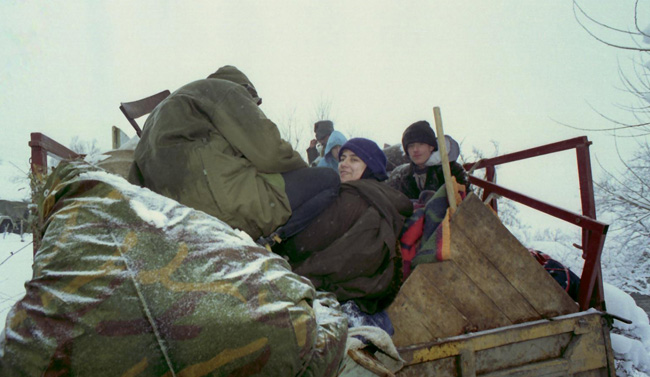
The winter of 1995–1996 was marked by particularly severe weather conditions, with temperatures reportedly dropping to minus 30°C. Despite these conditions, thousands of families departed, often transporting their belongings in private vehicles, trucks, improvised trailers, or agricultural carts. The movement was directed primarily toward eastern Bosnia, including locations such as Pale, Sokolac, Bratunac, Knežina, Miljevići, and Bijeljina.
One of the most documented aspects of this exodus was the exhumation and relocation of graves. Numerous families removed the remains of relatives who had been buried in Sarajevo during the war. Testimonies and journalistic accounts describe individuals digging through frozen ground, sometimes at night, in order to transfer the remains of deceased family members to areas that would remain under the administration of Republika Srpska. The motivations cited included fear of potential desecration, unwillingness to leave relatives buried in what was perceived as uncertain circumstances, and the desire for continued proximity to family graves.
International correspondents documented scenes from Sarajevo cemeteries during this period, describing repeated exhumations and the transport of coffins alongside household belongings. Estimates referenced in various reports indicate that thousands of bodies were reburied in municipalities such as Sokolac (approximately 960), Bratunac (141), Knežina (120), and Miljevići (around 3,000), among others.
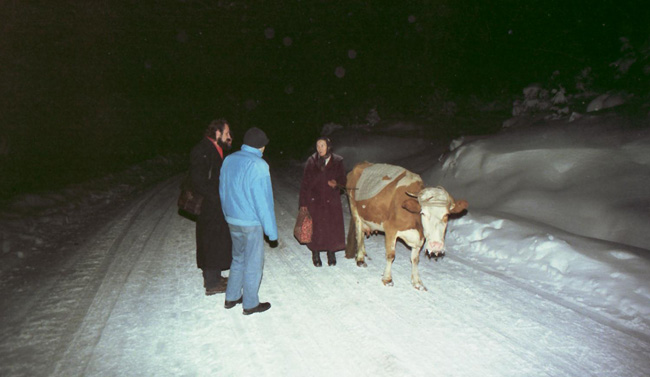
The Commission heard testimony from individuals who personally participated in or witnessed these exhumations. Accounts include families transferring the remains of sons killed during the war, individuals relocating graves that had reportedly been desecrated, and widows who later decided to move their spouses’ remains years after the conflict due to concerns about grave security. These testimonies form part of the documented record examined by the Commission.
The demographic impact of this departure was significant. Of approximately 150,000 Serbs who lived in Sarajevo prior to and during the conflict, only a small percentage remained in the post-war period. The exodus contributed to a substantial alteration of the city’s pre-war multiethnic composition.
The Commission situates this episode within the broader context of post-conflict territorial restructuring and population movements in Bosnia and Herzegovina. It identifies the events of early 1996 as one of the most consequential demographic shifts affecting the Serb community of Sarajevo. The relocation of both the living and the deceased is documented as a distinct and historically significant dimension of the post-Dayton transition period.
By examining archival records, demographic data, media reports, and witness testimony, the Commission presents the exodus as a complex phenomenon shaped by political agreements, security perceptions, institutional transformations, and individual decisions taken under conditions of uncertainty.


