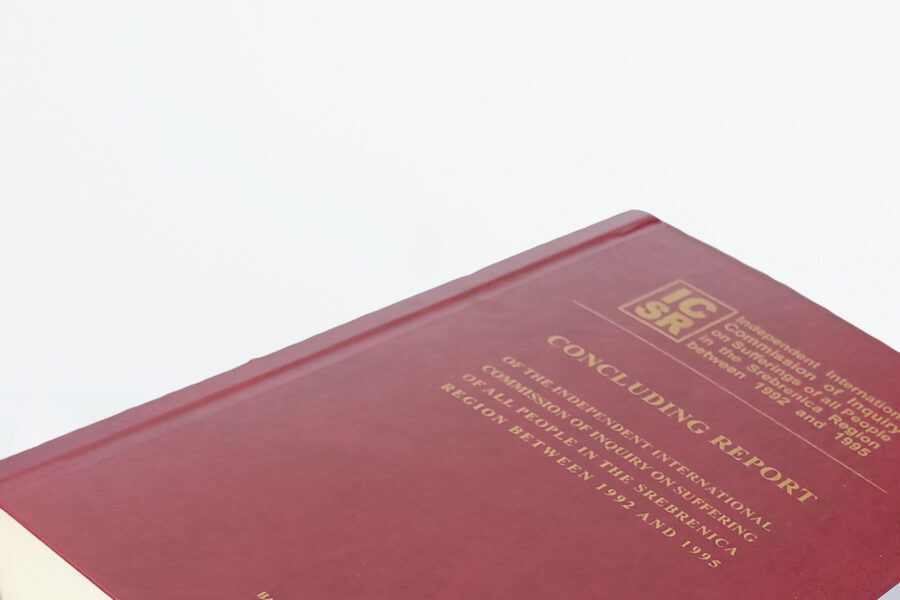

Historical reports have traditionally been preserved in libraries, archives and academic institutions. Bound in printed volumes and stored on shelves, they serve as important records of past events and valuable resources for researchers. Yet in today’s world, preserving history is no longer enough.
The way people access information has changed dramatically. New generations learn, communicate and explore history through digital platforms, video content, social media and interactive media. As a result, many important historical documents remain largely invisible to the audiences that could benefit from them the most. This challenge inspired the creation of INCOMFIS.
WHY HISTORICAL MEMORY NEEDS NEW APPROACHES
Throughout history, archives have played a vital role in preserving documents, testimonies and records for future generations. Without archives, much of humanity’s collective memory would be lost. However, preservation alone does not guarantee accessibility.
A report containing hundreds of pages of research may be available online, yet remain unread by most people. Historical findings may exist within archives but never reach students, educators or wider audiences.
As technology continues to transform society, historical documentation must evolve alongside it. Today, digital storytelling offers new opportunities to connect historical records with modern audiences while maintaining respect for the original sources.
THE GAP BETWEEN RESEARCH AND PUBLIC AWARENESS
Many historical studies require years of research, analysis and documentation. Their findings often contain valuable information supported by testimonies, archival materials, demographic studies and historical evidence. Yet these works are frequently known only within academic or specialist circles.
For younger audiences especially, long reports can appear inaccessible or difficult to navigate. Important historical information may therefore remain overlooked despite its significance.
The challenge is not a lack of information.
The challenge is making information discoverable.
This is where digital media can play an important role.
THE MISSION OF INCOMFIS
INCOMFIS was established as a digital archive and historical documentation initiative dedicated to preserving and promoting the reports of the Independent International Commissions on Sarajevo and Srebrenica. The project seeks to bridge the gap between historical documentation and modern audiences. Rather than replacing original reports, INCOMFIS aims to create pathways that encourage people to explore them.
Through articles, interviews, documentary videos, archival materials, timelines and educational content, the platform transforms complex historical documentation into accessible digital resources. The objective is simple: To ensure that important historical materials remain visible, accessible and relevant in the digital age.

DIGITAL STORYTELLING AS A TOOL OF PRESERVATION
Digital storytelling is often associated with entertainment, but it can also serve as a powerful educational tool.
A testimony can become a documentary interview. An archival photograph can become part of an interactive timeline. A historical report can be presented through visual explainers and educational articles. These formats help audiences engage with historical material in ways that are familiar to modern forms of communication.
Most importantly, they encourage curiosity. A short video may inspire someone to read a report. An interview may encourage further research. An article may lead a visitor to explore historical sources they had never encountered before. In this way, digital media becomes an extension of historical preservation.
BUILDING A LIVING ARCHIVE
INCOMFIS is more than a website. It is an ongoing effort to create a living archive where reports, testimonies, photographs, videos and historical materials can be preserved and explored together. The platform combines traditional archival principles with modern communication tools to create a space where historical documentation remains active rather than forgotten.
Future developments will include additional interviews, multimedia projects, educational resources, visual timelines and documentary content designed to support greater understanding of historical events and sources.
PRESERVING HISTORY FOR FUTURE GENERATIONS
Every generation inherits historical records from those who came before it. The responsibility of the present generation is not only to preserve those records but also to ensure they remain accessible and understandable.
As communication technologies continue to evolve, historical memory must adapt as well. The future of historical preservation lies not only in archives and libraries, but also in digital platforms capable of bringing documents, testimonies and research to wider audiences around the world.
INCOMFIS was created with that purpose in mind. To preserve historical memory. To improve access to historical documentation. And to ensure that important records continue to inform future generations in an increasingly digital world.